
Most people notice the obvious stars first. The roses. The peonies. The lilies. The hydrangeas. The ranunculus doing their luxurious little layered-petal thing like they know exactly how photogenic they are. And fair enough — those are the attention magnets.
But if you have ever looked at an arrangement and thought, “Why does this one feel so much richer, softer, moodier, more elegant, more natural, or just more complete?” the answer is very often not the headline flower. It is the supporting plant material — the ferns, willow, greens, branches, seeded textures, and auxiliary botanical pieces that rarely get top billing but do an enormous amount of visual work.
At sancarlosflorist.com, we love the big blooms too, obviously. But floral design is not just about focal flowers. It is about line, texture, movement, softness, contrast, rhythm, and atmosphere. That is where these supporting materials shine. So let’s give some overdue love to the often-forgotten plants that help flower arrangements feel finished instead of flat.
🌿 Why Supporting Greens Matter So Much
One of the biggest misconceptions people have about floral arrangements is that greenery is just filler. That word has done a lot of damage. Good supporting material is not there because the florist got bored and wanted to stuff leaves between the roses like packing peanuts. It is there because a strong arrangement needs structure and mood, not just expensive flower heads stacked awkwardly into a vase.
Supporting plants do several important things:
- They create shape and help define the silhouette of the arrangement.
- They add texture, which keeps a design from feeling visually one-note.
- They soften transitions between flowers and space.
- They introduce movement, especially when the stems arc, trail, or branch outward.
- They help set the emotional tone — romantic, airy, woodsy, modern, wild, elegant, calm, dramatic.
In other words, these materials are often doing the behind-the-scenes styling that makes the flowers themselves look more intentional and more alive.
🌳 Ferns: The Softening Masters
Ferns are one of the classic examples of something people vaguely register in an arrangement without always consciously noticing. They are excellent at adding softness, fullness, and a kind of feathery visual cushion around stronger focal blooms.
Leatherleaf fern is one of the best-known florist greens, and it has been used for ages because it is reliable, textured, and useful. But the broader fern category matters because ferns bring a very specific feeling: they make arrangements feel more layered, more organic, and less stiff.
If you put a bunch of roses in a vase with no greenery at all, the result can be striking but also a little abrupt. Add fern, and suddenly the arrangement has atmosphere. The edges soften. The flowers look more nestled and less stranded. It is not flashy work, but it is very effective work.
Ferns are especially helpful in:
- romantic designs that need softness
- garden-style bouquets that should feel lush
- sympathy arrangements where calm texture matters
- classic mixed bouquets that need fullness without heaviness
🍁 Willow: Line, Movement, and a Bit of Drama
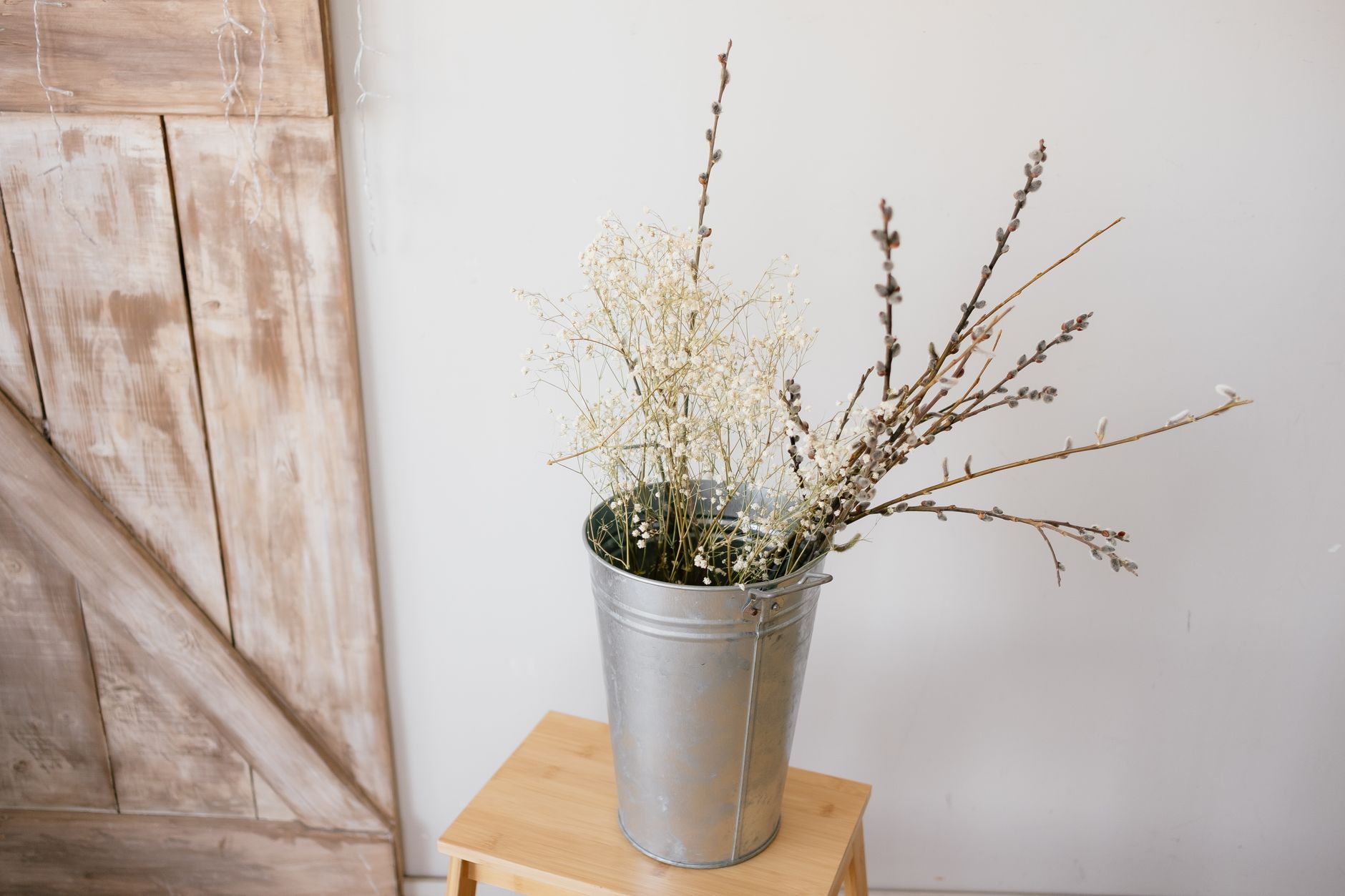
Willow is a completely different kind of supporting material, and that is exactly why it is so useful. Where fern softens and fills, willow creates line and gesture. It can arc. It can trail. It can twist. It can make an arrangement feel taller, looser, moodier, or more sculptural.
Curly willow is especially beloved in floral design because it adds motion and personality instantly. Even before a single focal bloom goes in, willow can establish that the arrangement has energy. It says, “This is not just flowers in a container. This is a composition.”
Willow is often used when a florist wants:
- a stronger line element
- a more architectural shape
- seasonal naturalism
- height or airy expansion without visual heaviness
- just enough drama to make the arrangement feel memorable
Because of that, willow is especially effective in contemporary arrangements, larger event work, winter and early-spring designs, and pieces that want a little more Peninsula-modern elegance than old-school round bouquet energy.
🌿 Eucalyptus: The Fragrance-and-Texture Powerhouse
People notice eucalyptus more than some other greens because it brings scent along with shape, but it is still often treated as an accessory rather than the crucial mood-setter it can be.
Silver dollar eucalyptus, seeded eucalyptus, baby blue eucalyptus — each one brings slightly different scale and character, but they all contribute something important. Their dusty green-gray tone is often a perfect foil for brighter flowers. They cool down hot color palettes, add movement, and help arrangements feel natural and stylish instead of overly polished.
Seeded eucalyptus in particular is a florist favorite because the little seed clusters add textural detail that keeps the eye moving through the arrangement. It is not just green. It is green with punctuation.
Eucalyptus often helps an arrangement feel:
- fresh
- modern
- softly wild
- fragrant
- visually balanced
🌺 Salal, Ruscus, and the Greens That Quietly Hold Everything Together
Then there are the workhorse greens that rarely get fan mail but do tremendous behind-the-scenes labor. Salal, Italian ruscus, and Israeli ruscus are great examples.
Salal is broad, glossy, sturdy, and excellent for creating a strong green framework. It helps establish fullness and can anchor arrangements that need a richer base. It is less whispery than fern, but that sturdiness is exactly the point.
Ruscus, especially the Italian type, adds line in a different way than willow. It tends to be more elegant and flowing, with long stems that can extend the silhouette of a bouquet beautifully. It is a favorite for weddings and modern designs because it adds grace without stealing attention.
These greens are often what keep an arrangement from feeling sparse or disconnected. They help blooms relate to one another visually. You may not look at a finished arrangement and say, “Ah yes, the ruscus is doing noble work today,” but in design terms, it often is.
🌱 Seed Pods, Berries, and Other Textural Extras
Some of the most satisfying auxiliary materials are not leafy at all. They might be seed pods, berries, delicate branch tips, waxflower, brunia, dusty miller, or other textural companions that make an arrangement feel layered and seasonally alive.
These are the elements that often add personality. They can make a bouquet feel autumnal, woodland, coastal, festive, airy, sculptural, or just more interesting to look at up close. They also help prevent the arrangement from reading as “main flowers, and then empty space.”
This matters more than people realize. Great floral design usually rewards a second look. The little textures are a huge part of that. They make the arrangement feel inhabited instead of assembled.
🌊 Why These Supporting Plants Matter So Much on the Peninsula
Here on the Peninsula, people often respond really strongly to arrangements that feel natural, layered, elegant, and not overly forced. That is one reason supporting greens matter so much in local floral style. San Carlos, San Mateo, Redwood City, Burlingame, and the broader Peninsula tend to appreciate design that feels polished without feeling stiff.
That is exactly where materials like fern, willow, eucalyptus, salal, and ruscus earn their keep. They help arrangements echo the natural textures people around here actually live with — bay light, coastal greens, garden structure, redwood-country softness, and the calmer palette of Peninsula landscapes.
In a way, these supporting plants help bouquets feel more regionally believable. They connect the flowers to a broader mood rather than making them feel like isolated color explosions dropped from outer space.
🚩 Misconception: If It Is Not the Main Flower, It Is Not Important
This is probably the biggest misconception of all. People assume the main bloom is doing all the work. It is not. The focal flowers may be the faces of the arrangement, but the supporting material is often the lighting, styling, architecture, soundtrack, and emotional framing all at once.
A rose can be beautiful by itself. But put that same rose in a carefully designed arrangement with the right supporting greens and suddenly it feels more romantic, more dimensional, and more complete. That difference is not imaginary. It is design.
✨ The Bottom Line
Ferns, willow, eucalyptus, salal, ruscus, branches, berries, and other auxiliary plant materials may not be the first thing people name when they think about flowers, but they are often the reason an arrangement feels rich, atmospheric, and fully resolved. They soften, shape, lift, connect, and transform the floral stars around them.
So the next time you see a bouquet that feels especially elegant, especially natural, or especially alive, look a little closer. There is a good chance the unsung heroes are in there doing quiet, spectacular work.
At sancarlosflorist.com, we love that part of floral design — not just the headline bloom, but the whole supporting cast that gives the arrangement its mood. Because sometimes the plants people forget are exactly the ones making everything else look unforgettable. 🌸