
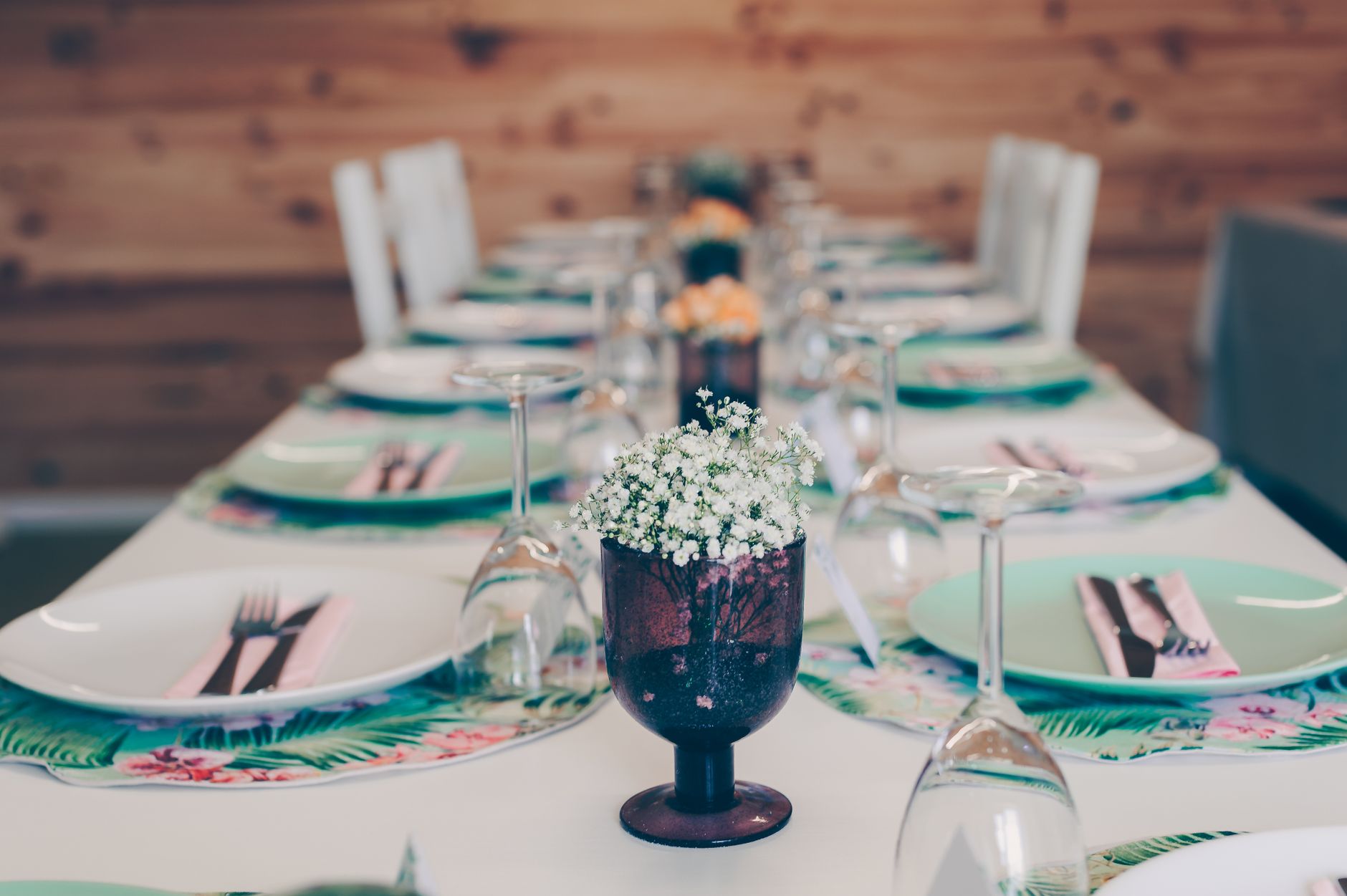
Nobody teaches you this. You learn how to cook. You learn how to set a table. You maybe learn which wine goes with which protein. But nobody ever sits you down and says: “Here is which flowers go on the table when you are making pad thai.”
We think about this constantly. As florists, we build arrangements that end up on tables where food is being served. And there is something deeply satisfying about a table where the flowers and the food feel like they belong together — where the colors, the mood, the energy, and the visual style all align into something that feels curated without feeling fussy.
This is our completely obsessive, cuisine-by-cuisine guide to putting the right flowers on the table tonight.
📏 First: The One Rule That Matters More Than Anything
Your centerpiece must not block sightlines across the table.
This is the number one table flower mistake, and almost everyone makes it. You build or buy a beautiful tall arrangement, put it in the center of the dining table, and suddenly nobody can see the person across from them. Conversation dies. People lean sideways. The flowers become an obstacle instead of an enhancement.
The rule: Table arrangements must be either below 12 inches tall (below eye level when seated) or above 24 inches tall (above head level, on a tall pedestal). Anything in between blocks the view and ruins the table dynamic.
For home dinners, low is almost always the answer. Save the tall arrangements for the sideboard, the kitchen counter, or the entry table. The dining table gets something compact, lush, and low.
Now — what goes in that low arrangement depends entirely on what you are cooking.
🍝 Italian Night
The food: Pasta, risotto, osso buco, bruschetta, tiramisu. Warm, rich, generous. The table is probably covered in serving bowls and bread and olive oil and wine.
The flowers: Warm tones. Think Tuscan countryside — terra cotta, amber, dusty rose, sage green, cream. Garden roses, ranunculus, spray roses in peach or coral, eucalyptus, and maybe a few sprigs of Italian ruscus.
The vase: Something earthy. A terra cotta pot. A rustic ceramic bowl. A short, wide-mouthed vessel that looks like it belongs on a table in Siena. Nothing shiny, nothing modern.
The mood: Abundant but not fussy. The flowers should feel like they were gathered from a garden, not designed in a shop. Loose, slightly undone, warm. Like the dinner itself — generous and unpretentious.
What to avoid: Tropical flowers, bright neon colors, anything too structured or formal. Italian food is about warmth and comfort. The flowers should match.
🌮 Mexican / Taco Night
The food: Tacos, enchiladas, ceviche, guacamole, margaritas. Bright, colorful, festive. The table is covered in small bowls of salsa, lime wedges, and cilantro.
The flowers: Fiesta colors. Hot pink, orange, yellow, red, magenta. Sunflowers, gerbera daisies, marigolds (cempasxúchil — the traditional Mexican flower), bright carnations, and bold zinnias. This is NOT the night for pastels.
The vase: A painted ceramic pot, a colorful tin can (cleaned up), a short glass filled with limes and flowers on top. Something playful. Bonus points if you have a Talavera-style vase.
The mood: Joy. Volume. Color without restraint. The flowers should match the energy of a table full of shared plates and people reaching over each other for the hot sauce. Nothing precious.
What to avoid: White flowers, formal arrangements, anything quiet or subdued. Mexican food is a party. The flowers should be at the party too.
🍜 Thai / Vietnamese
The food: Pad thai, green curry, pho, summer rolls, lemongrass chicken. Aromatic, beautiful, precise. Thai and Vietnamese food is both flavorful and visually stunning — the herbs, the colors, the textures on the plate are already doing a lot of visual work.
The flowers: Restraint. Orchids (single stems in bud vases), tropical greens (monstera leaf, ti leaf), or a single stem of something dramatic — a bird of paradise, a protea, or an anthurium. The arrangement should be minimal and architectural, not lush and abundant.
The vase: Clean lines. A simple cylinder. A black or white ceramic vessel. Something that would not look out of place in a Bangkok hotel lobby. No clutter.
The mood: Elegant simplicity. The food is the star. The flowers are an accent — present but not competing. Think one perfect thing rather than many things.
What to avoid: Busy mixed bouquets, heavy garden-style arrangements, anything that visually competes with the food. Thai and Vietnamese cuisine is already visually rich. The flowers should provide contrast through simplicity.
🍣 Japanese
The food: Sushi, ramen, tempura, a bento-style spread, matcha dessert. Japanese food is defined by restraint, precision, and intentional negative space. Every element on the plate is placed deliberately. The table should reflect the same philosophy.
The flowers: One branch. One stem. One gesture. A single cherry blossom branch in a narrow vase. One peony, half-open. Three stems of pussy willow. A miniature ikebana-inspired arrangement with one focal stem, one supporting branch, and one accent of greenery. Less is everything.
The vase: Ceramic — handmade if possible. A Japanese-style vessel with an asymmetric glaze. Something with wabi-sabi character. Or a simple clear glass cylinder with a single stem. The vase matters as much as the flower.
The mood: Meditative. The arrangement should make you slow down the same way the food does. It should reward close looking. It should feel like someone spent five minutes choosing exactly the right stem and exactly the right placement.
What to avoid: Everything abundant, colorful, or casual. A big mixed bouquet next to sushi is a cultural mismatch that feels wrong even if you cannot articulate why.
🧀 Charcuterie Board / Wine Night
The food: Cheese, cured meats, olives, crackers, honey, fruit, nuts. A date night or a gathering where the table IS the meal — grazing, wine, and conversation.
The flowers: Herbs and earth tones. Arrangements that include rosemary, thyme, lavender, and sage alongside flowers. Dusty roses, ranunculus in muted tones (mauve, blush, antique peach), scabiosa pods, dried grasses, and textural elements. The palette: burgundy, plum, sage green, cream, terracotta.
The vase: Low and wide. A compote dish. A shallow ceramic bowl. Something that sits among the boards and platters like another food element. The arrangement should feel like part of the spread, not separate from it.
The mood: Gathered and natural. The flowers should look like they could have come from the same countryside as the cheese. Earthy, textured, slightly wild. The herbs in the arrangement should make you wonder briefly if they are for eating or for looking — that ambiguity is the point.
What to avoid: Bright, saturated colors. Formal roses. Anything that looks like it belongs at a birthday party rather than a wine bar.
🥗 Summer Salad / Light Dinner
The food: A big beautiful salad with grilled chicken or fish. Grain bowls. Fresh bread. Rosé. The kind of dinner that feels healthy, light, and effortless — even though the salad took 30 minutes to assemble.
The flowers: Wildflower style. Daisies, chamomile, Queen Anne’s lace, sweet peas, small garden roses, and abundant greenery. The arrangement should look like you walked through a meadow on the way home and gathered an armful of whatever was blooming.
The vase: A mason jar. A simple clear glass. A small pitcher. Something casual and unfussy that says “I did not try too hard and it still looks beautiful.”
The mood: Fresh, airy, unstructured. The flowers should match the food: light, seasonal, and seemingly effortless. No tight, formal arrangements. Let things fall where they fall.
What to avoid: Heavy, dense arrangements. Dark colors. Anything that feels wintery or formal next to a summer salad.
🍖 BBQ / Grilling
The food: Burgers, ribs, grilled vegetables, corn on the cob, coleslaw, cold beer. Outdoor. Casual. Nobody is using a cloth napkin.
The flowers: Sunflowers. That is the answer. Sunflowers in a bucket. Sunflowers in a mason jar. Sunflowers with some wildflowers thrown in. Bold, warm, cheerful, and impossible to over-think.
The vase: A galvanized metal bucket. A tin watering can. A wide-mouth jar. Something that would survive being knocked over by someone reaching for the ketchup. Nothing breakable. Nothing precious.
The mood: The flowers should not be trying harder than the food. If dinner is ribs and beer on paper plates, the flowers should be a bucket of sunflowers on the picnic table. Match the energy. Do not elevate beyond what the occasion calls for.
What to avoid: Formal arrangements, delicate vases, anything that requires careful handling or looks out of place next to a bottle of BBQ sauce.
🎨 The Quick-Reference Pairing Chart
- Italian: Garden roses, ranunculus, peach/coral/terra cotta tones, earthy vase
- Mexican: Sunflowers, gerberas, marigolds, hot pink/orange/yellow, playful vessel
- Thai/Vietnamese: Single orchid stem, tropical green, minimal, architectural
- Japanese: One branch or stem, ikebana-inspired, handmade ceramic vase
- Charcuterie: Herbs + muted flowers, dusty/earthy palette, low and wide
- Summer salad: Wildflowers, daisies, sweet peas, mason jar, airy and loose
- BBQ: Sunflowers in a bucket, casual, indestructible
🌿 Why This Matters
A table where the flowers match the food does not just look better. It feels more intentional. It tells your guests (or just yourself, on a Tuesday night) that someone thought about the whole experience — not just what to eat, but what the table looks like while eating it.
You do not need expensive flowers to do this. A $10 bunch from the grocery store can work if you choose the right colors for the cuisine. A single stem in a bud vase can work for Japanese night. A handful of herbs from your garden tucked into a small arrangement can work for charcuterie.
But if you want something designed with intention — built to match the dinner you are planning, in the colors and style that complement the food — that is exactly what a designer’s choice order is for. Tell us what you are cooking. We will build the table to match. 🍽️
Browse our arrangements, plants, and gifts. Same-day delivery across San Carlos, Redwood City, Belmont, Palo Alto, and the Peninsula.