
Someone you know has lost someone. Maybe the call came this morning. Maybe you saw the post last night. Maybe you have known for a few days and you have been staring at your phone, wanting to do something but not knowing what.
You are not alone in that paralysis. It is one of the most universal human experiences — standing at the edge of someone else’s grief and feeling completely inadequate. Nothing you say will be enough. Nothing you do will fix it. And yet doing nothing feels worse than doing something imperfect.
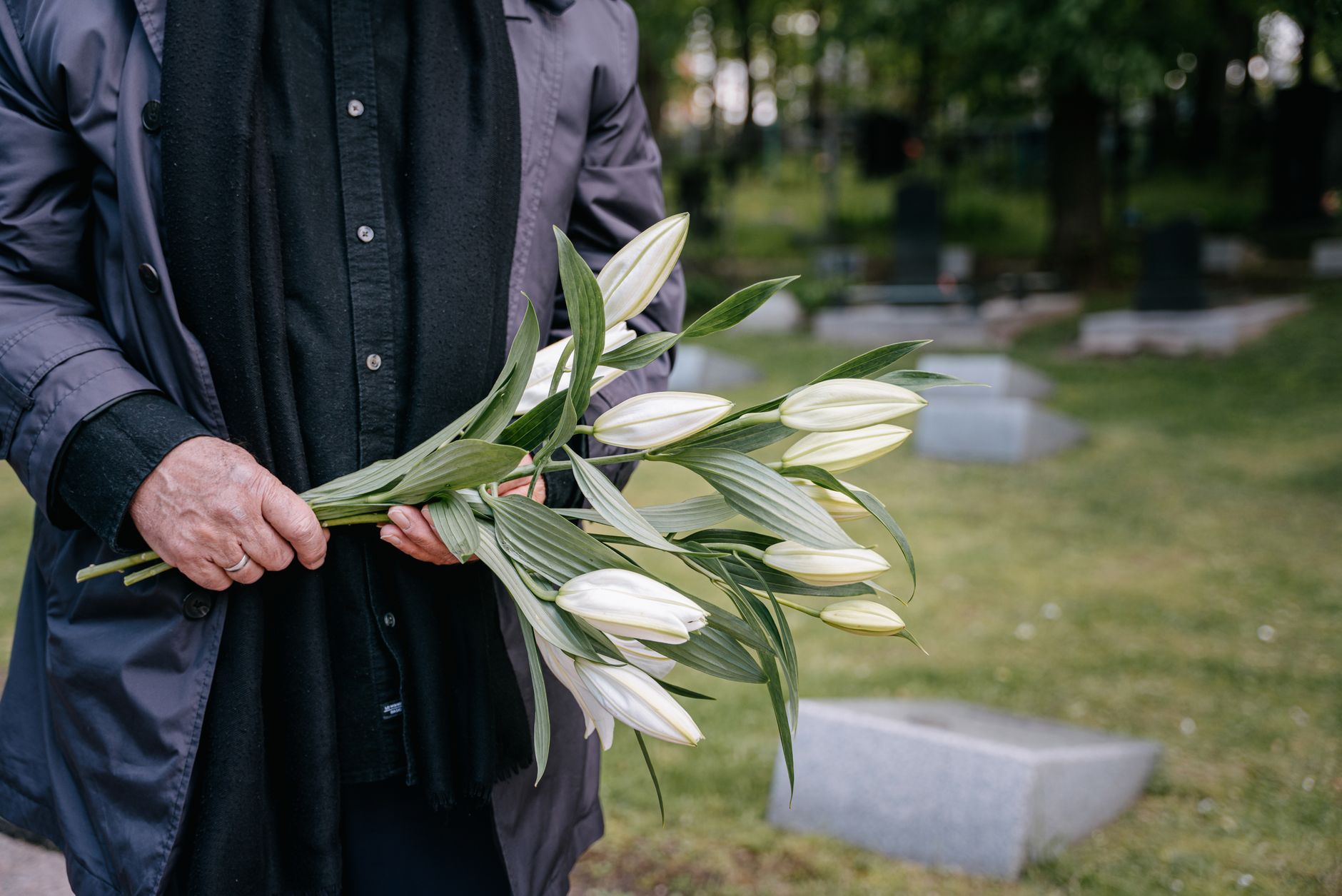
Flowers are the something. They have been for centuries. Not because they make grief go away — nothing does — but because they say, without requiring anyone to find the right words: I am here. I see this. You are not going through it alone.
Here is everything we know about sending sympathy flowers on the Peninsula — the practical logistics, the local funeral homes, the etiquette, and the emotional truths nobody teaches you until you need them.
🏛️ Peninsula Funeral Homes and Mortuaries
When someone passes away on the mid-Peninsula, the service will almost always be held at one of these facilities or at a house of worship. We deliver to all of them regularly and know their receiving procedures:
- Crippen & Flynn Funeral Homes — locations in Redwood City and Woodside. One of the most established funeral home families on the Peninsula. Both chapels accept flower deliveries; include the name of the deceased and the date/time of the service with your order.
- Duggan’s Serra Mortuary — Daly City, with services drawing families from across the Peninsula. A large facility that handles significant volume; deliveries should arrive at least two hours before the service.
- Sneider & Sullivan & O’Connell’s Funeral Home — San Mateo. A community funeral home that has served the mid-Peninsula for generations. They accept deliveries at the front entrance and stage arrangements in the chapel.
- Chapel of the Highlands — Millbrae, adjacent to Golden Gate National Cemetery. A mortuary and chapel with strong ties to the military community. Include the chapel or room designation if the facility has multiple services that day.
- Spangler Mortuary — Los Altos. Serves families from the southern Peninsula and South Bay. Intimate chapel, straightforward delivery process.
- Cusimano Family Colonial Mortuary — Mountain View/San Jose area. Serves many Peninsula families. A traditional, family-run operation.
- Skylawn Memorial Park & Funeral Home — San Mateo (Highway 92 in the hills above San Mateo). A combined cemetery and funeral home with indoor and outdoor service options. One of the most scenic memorial settings in the Bay Area. Include the service location within the grounds for delivery routing.
- Alta Mesa Memorial Park — Palo Alto. A cemetery with memorial services held in the garden setting. We deliver to the grounds regularly for interment services and memorial tributes.
If the service is at a house of worship — a church, synagogue, temple, or mosque — call the facility first. Some religious traditions welcome floral tributes at the service; others have specific guidelines or prefer donations in lieu of flowers. We can help you navigate this — just tell us where the service is and we will advise based on our experience.
💐 What the Arrangement Types Actually Mean
Sympathy flowers come in specific forms, and each one has a purpose and a place. This is the part nobody teaches you until you are standing in front of a florist’s website at 11 p.m. wondering what to order:
- Standing spray (easel arrangement): A large, formal display on a standing easel, placed near the casket or at the front of the chapel. These are significant — they are usually sent by the immediate family, a close group of friends, or an employer. If you are sending one, you are making a statement of closeness and respect.
- Casket spray: The arrangement that covers the top of the casket. This is almost always ordered by the immediate family only. If you are not a spouse, parent, or child of the deceased, do not order a casket spray — check with the family first.
- Wreath or heart: A shaped arrangement, often on an easel. Wreaths symbolize eternal life; hearts convey deep personal love. These are appropriate from close family members or intimate friends.
- Basket or vase arrangement: A table-sized arrangement that sits near the guest book, on a side table, or in the viewing area. This is the most common choice for friends, coworkers, neighbors, and extended family. It is appropriate, respectful, and does not overstep. If you are unsure what to send, this is the answer.
- Plant or garden arrangement: A living plant — a peace lily, an orchid, a garden dish — that the family can take home after the service and keep as a living memorial. Many people prefer plants because they endure. This is a thoughtful choice for someone who wants their tribute to outlast the week.
For more on the broader etiquette of sympathy flowers, our shared etiquette guide covers the nuances in depth.
⏰ When to Send
Timing matters more with sympathy flowers than with almost any other occasion. Here is what we recommend:
- To the funeral home for the service: Order as soon as you know the service date, time, and location. We need the arrangements delivered and staged at least one to two hours before the service begins. The funeral home staff will place them in the chapel or viewing room.
- To the family’s home (same week): If you cannot attend the service, or if the family has requested no flowers at the service, sending to the home is a beautiful alternative. The flowers arrive during the hardest days — when the house is quiet and full of grief and the kitchen counter is covered with foil-wrapped dishes from neighbors. Beauty in that moment matters.
- To the family’s home (two to four weeks later): This is the delivery most people forget, and it may be the most important one. The first week after a loss is a blur of logistics, visitors, and adrenaline. By week three or four, the visitors have stopped, the cards have slowed, the world has moved on — but the grief has not. An arrangement that arrives in that window with a card that says “I have not forgotten” can break a person open in the best possible way.
- On the anniversary: The first anniversary of a death is devastating. Most people face it alone because everyone else has moved on. Flowers that arrive on that date — or the week of — say: I remember too. That is an extraordinary gift.
✍️ What to Write on the Card
This is where most people freeze. The card feels impossible because nothing is adequate. Here is the truth: it does not have to be adequate. It just has to be sincere.
Short, honest messages are always better than long, reaching ones. The family will read dozens of cards. The ones they remember are the ones that sound like a real person, not a greeting card:
- “I am so sorry. I am thinking of you and your family.”
- “There are no words. I am here.”
- “[Name] was one of the kindest people I have ever known. I am grateful I got to know them.”
- “I do not know what to say, but I did not want to say nothing.”
- “Thinking of you during these impossible days.”
- “With love and deepest sympathy from [your name/your family].”
What to avoid:
- “They are in a better place.” — You do not know the family’s beliefs, and this can feel dismissive even when it is meant kindly.
- “I know how you feel.” — You do not. Even if you have experienced loss, every grief is its own. Acknowledge theirs without comparing.
- “Let me know if you need anything.” — This is kind but passive. If you can, be specific: “I am bringing dinner Tuesday” or “I will call you next week.” The card is for sympathy. The help is for later.
- Nothing at all. A card that arrives with flowers and no message is unsettling. Even your name and “with sympathy” is better than a blank card.
🏠 Sending to Someone Who Is Grieving (Not for the Service)
Not every sympathy delivery goes to a funeral home. Some of the most meaningful ones go directly to the person who is hurting — at their home, days or weeks after the service, when the public part of grief is over and the private part has begun.
This is the delivery we wish more people knew about. After the service, after the reception, after the thank-you notes are written, there is a long stretch of ordinary days that are no longer ordinary. The chair is empty. The routine is broken. The phone does not ring as much.
Flowers that arrive during that stretch say something that nothing else can say: This is still hard, and I know it is still hard, and you do not have to pretend it is not.
We wrote about this in our get-well guide as well — the idea that the late delivery, the one that comes after everyone else has stopped sending, is often the one that matters most. It is true for illness and it is profoundly true for grief.
🌿 Colors, Flowers, and Tone
Sympathy arrangements do not have to be somber. They can be — white lilies, white roses, soft greens — and for many services, that traditional palette feels right. But sympathy flowers can also celebrate. Here is how we think about it:
- White and green: Classic, formal, universally appropriate. White roses, white lilies, white chrysanthemums, white hydrangea with eucalyptus and fern. This palette works for any service, any tradition, any setting.
- Soft pastels: Lavender, blush, pale peach, soft blue. Gentle and comforting without being stark. Appropriate for most services and especially for home deliveries where the arrangement will sit in a living space.
- Bright and celebratory: Sunflowers, bright roses, vibrant mixed stems. When the family says “she loved color” or “he would have wanted something cheerful,” this is the arrangement. It is not disrespectful — it is personal. A tribute that reflects who the person was is always more meaningful than a generic white arrangement.
- The person’s favorite flower: If you know it, include it. A card that says “I remembered she loved peonies” alongside an arrangement that includes them is the kind of detail that makes a family cry in the way that heals rather than hurts.
💰 How Much to Spend
This question feels uncomfortable but it is practical and important. Here is honest guidance:
- $50–$75: A respectful vase or basket arrangement appropriate from a friend, neighbor, or coworker. This is the most common range and it is completely appropriate. Nobody judges the size of a sympathy arrangement — the gesture is what matters.
- $75–$125: A larger arrangement or a premium plant. Appropriate from close friends, a family, or a small group of coworkers pooling together.
- $125–$250+: A standing spray, a large easel piece, or a significant tribute. This range is typical for immediate family, a company, or a close-knit group honoring someone central to their lives.
- A living plant ($35–$75): A peace lily, an orchid, a garden dish. A meaningful choice at any price point. The family takes it home and it lives on. Some of the most treasured sympathy gifts we have delivered are $40 peace lilies that are still alive and growing years later.
If funds are tight, a $45 arrangement with a heartfelt card means exactly as much as a $200 standing spray. The flower is not the point. The reaching out is the point.
🛐 Religious and Cultural Considerations
The Peninsula is one of the most culturally diverse regions in the country, and funeral customs vary widely. A few important notes:
- Catholic and most Christian services: Flowers are traditional and universally welcome. Any arrangement type is appropriate. White flowers are classic but not required.
- Jewish funerals (shiva): Flowers are traditionally not sent to a Jewish funeral or shiva house. Instead, send a food gift, make a donation in the deceased’s name, or send a plant to the home after shiva has ended (typically one week after burial). If you are unsure, ask. The family will appreciate the thoughtfulness of the question.
- Buddhist and Hindu services: White flowers are traditional. Chrysanthemums and lotus are especially significant. Avoid red flowers, which symbolize celebration in many Asian traditions. Wreaths are common.
- Muslim funerals: Customs vary by community. Some welcome flowers; others prefer charitable donations. When in doubt, contact the mosque or the family.
- Secular or celebration-of-life services: These are increasingly common on the Peninsula and often have no restrictions. The family may even request specific colors or styles. Ask if you can — a personalized tribute is always welcome at a celebration of life.
When in doubt about any tradition: call us. We have delivered to services across every tradition on the Peninsula, and we can help you navigate what is appropriate.
💛 What We Have Learned
We have been delivering sympathy flowers for a long time. Here is what we know that nobody puts on a website:
- The delivery driver knows. When our driver carries a sympathy arrangement to a door, they know what it means. They set it down gently. They ring the bell softly. They leave. There is no cheerful wave. There is quiet respect. We train for that because it matters.
- The late delivery is often the most meaningful. We have said it already, but it bears repeating: flowers that arrive three weeks after the service, when the world has moved on, tell the grieving person that someone still remembers. That is a gift no casserole or card can match.
- You cannot get it wrong. If you are reading this article and worrying about choosing the wrong arrangement or writing the wrong card, stop. The fact that you are thinking about it at all means you care. Send flowers. Any flowers. Write something honest. The family will remember that you reached out, not what variety of lily you chose.
- The florist carries some of the grief too. We do not talk about this much, but it is true. When we design a casket spray, we know what it is for. When we read the card messages, we feel them. We take this work seriously because it is serious. It is a privilege to be part of how people honor the people they love.
Browse our sympathy arrangements — standing sprays, baskets, vases, and plants designed with care and delivered with the reverence these moments require. Same-day delivery to all Peninsula funeral homes, mortuaries, houses of worship, and homes across San Carlos, Redwood City, Menlo Park, Palo Alto, San Mateo, Burlingame, and the mid-Peninsula.