
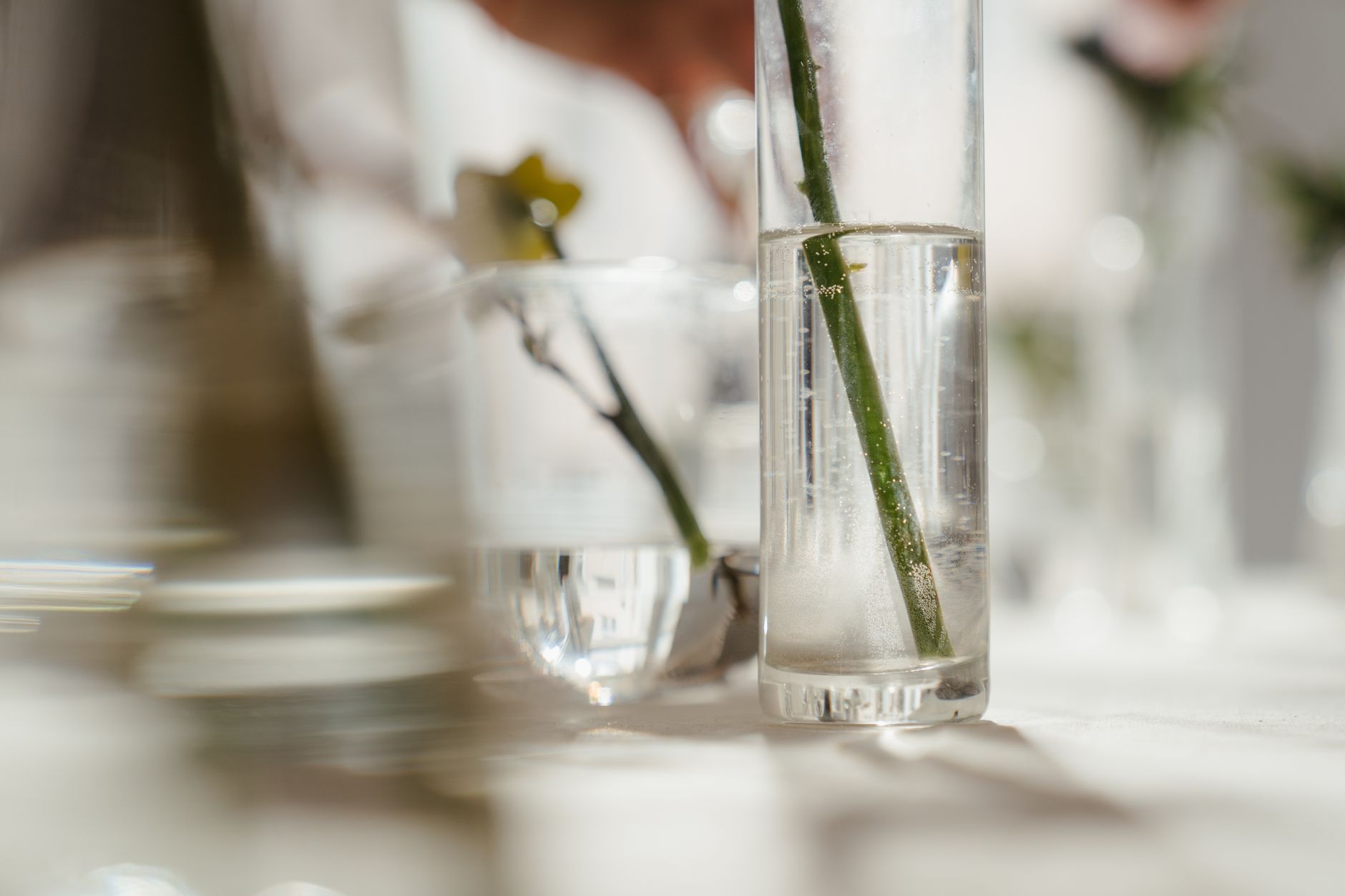
At some point in human history, someone looked at a bouquet of wilting roses, looked at their medicine cabinet, and thought: “What if I gave these flowers a headache pill?”
And thus, one of the most enduring home remedies in floral care was born. Drop an aspirin in your flower water and your blooms will last longer. You’ve heard it from your grandmother, from Pinterest, from that one coworker who has very strong opinions about vase maintenance. It’s right up there with “add a penny” and “pour in some Sprite” in the pantheon of flower folk wisdom.
But here’s the question nobody seems to ask: does it actually work? And if so, why? And if not, what should you be doing instead?
Grab your lab coat (or at least your reading glasses). We’re going full science nerd on this one.
💊 First: What Even IS Aspirin?
Aspirin’s active ingredient is acetylsalicylic acid (ASA), a synthetic derivative of salicylic acid. Salicylic acid occurs naturally in willow bark, meadowsweet, and various other plants—which is actually a delightful bit of botanical irony, since we’re talking about putting a plant-derived chemical back into plant water.
In humans, aspirin works as an anti-inflammatory, pain reliever, and blood thinner. It inhibits an enzyme called cyclooxygenase (COX), which reduces the production of prostaglandins—compounds involved in inflammation and pain signaling.
Plants don’t have headaches (as far as we know). But they do have biochemical pathways that salicylic acid influences. And that’s where this gets interesting.
🌿 The Science: Salicylic Acid and Plant Defense
Here’s where the “grandma hack” starts to look surprisingly legit.
Salicylic acid is a naturally occurring plant hormone. In living plants, it plays a critical role in systemic acquired resistance (SAR)—essentially the plant’s immune system. When a plant is attacked by pathogens (bacteria, fungi, viruses), it produces salicylic acid to trigger defense responses throughout its tissues, even in parts of the plant that haven’t been directly infected. It’s like the plant sending out a biochemical memo: “Heads up, everyone. We’re under attack. Fortify the cell walls.”
Research published in the Annals of Botany and Plant Physiology journals has shown that exogenous (externally applied) salicylic acid can:
Delay senescence. Senescence is the biological process of aging and deterioration in plants. In cut flowers, it’s the wilt-and-droop timeline. Salicylic acid has been shown to slow this process by modulating ethylene production—ethylene being the gaseous hormone that triggers ripening, petal drop, and leaf yellowing.
Reduce stomatal opening. Stomata are tiny pores on plant surfaces that regulate water loss. Salicylic acid can partially close stomata, reducing transpiration (water evaporation through the leaves and petals). Less water loss = better hydration = longer-lasting flowers.
Inhibit bacterial growth. The slightly acidic environment created by dissolving aspirin in water (lowering the pH) can slow the growth of bacteria in the vase. Bacteria are the #1 enemy of cut flower longevity—they colonize the cut stem ends, clog the xylem (the plant’s water-conducting vessels), and block water uptake. Anything that slows bacterial growth is a win.
So the short answer is: yes, there is legitimate science behind the aspirin trick. It’s not magic, it’s not placebo, and your grandmother was onto something.
📊 But How MUCH Does It Actually Help?
Here’s where we pump the brakes a little. The science is real, but the magnitude of the effect is moderate at best.
Several controlled studies have tested aspirin against other vase solutions. A frequently cited study from the University of Georgia measured vase life of cut roses with various additives:
Plain water: Average vase life of about 7 days.
Aspirin water (crushed aspirin dissolved in vase water): Average vase life of about 8–9 days. A real improvement, but not dramatic.
Commercial flower food (the little packet that comes with your bouquet): Average vase life of 10–13 days. Significantly better than aspirin alone.
The reason commercial flower food wins is that it’s a three-part cocktail specifically engineered for cut flowers:
1. Sugar (usually sucrose) — provides an energy source for the flower, since it’s been cut off from the plant that was photosynthesizing for it. Think of it as food. Cut flowers are essentially starving; sugar keeps their cellular processes running.
2. An acidifier (citric acid or similar) — lowers the water pH to the optimal range (around 3.5–5.0), which both inhibits bacterial growth and improves water uptake through the xylem. Aspirin does this too, but flower food does it more precisely.
3. A biocide (often a tiny amount of bleach or isothiazolinone) — actively kills bacteria in the water. This is the big one. Aspirin slows bacteria; a proper biocide eliminates them.
So aspirin gives you part of the picture (the acid and some anti-bacterial action), but misses the sugar (energy) and the heavy-duty biocide. It’s like taking one vitamin instead of the whole multivitamin. Better than nothing, genuinely helpful, but not the full solution.
🦫 What About All Those Other Home Remedies?
Since we’re in myth-busting mode, let’s run through the greatest hits of “stuff people put in flower water” and rate them:
Aspirin — ⭐⭐⭐ out of 5. Legit science, moderate effect. Does help. Not as good as flower food.
A penny (copper coin) — ⭐ out of 5. The theory is that copper acts as a fungicide. In reality, modern pennies (post-1982 in the U.S.) are zinc with a thin copper coating, and the amount of copper that dissolves into vase water is negligible. Even with an older solid-copper penny, the antimicrobial effect is minimal compared to proper biocides. Mostly a myth.
Sprite or 7-Up — ⭐⭐⭐ out of 5. Surprisingly decent! The sugar provides energy and the citric acid lowers pH. It’s basically a DIY version of two-thirds of flower food. Use about ¼ cup per quart of water. The downside: no biocide component, so bacteria will still eventually take over. And definitely use the regular version, not diet—artificial sweeteners do nothing for flowers.
Vodka — ⭐⭐ out of 5. A few drops of vodka in vase water can slow ethylene production and inhibit bacterial growth. There’s some supporting research from university extension programs. But the margin of error is thin: too much alcohol and you’ll damage the flower tissues. If your bouquet starts slurring its words, you’ve gone too far.
Bleach — ⭐⭐⭐⭐ out of 5. A tiny amount (¼ teaspoon per quart of water) is actually very effective as a biocide. This is essentially what commercial flower food uses. The key word is tiny—too much bleach will damage stems and petals. Used carefully, it’s one of the best single-ingredient additions.
Sugar alone — ⭐⭐ out of 5. Feeds the flower, but also feeds bacteria. Without an acidifier or biocide, adding sugar to plain water can actually make things worse by turbocharging bacterial growth. It’s like leaving a buffet out for germs.
Apple cider vinegar + sugar — ⭐⭐⭐⭐ out of 5. Two tablespoons of vinegar plus two tablespoons of sugar per quart of water. The vinegar acidifies and inhibits bacteria; the sugar feeds the flowers. This is a genuinely solid DIY flower food. Multiple university extension services recommend it as the best home alternative to commercial packets.
Hairspray — ⭐ out of 5. Spraying hairspray on petals to “preserve” them is a craft technique for dried flowers, not a vase life extender. On fresh flowers, it clogs stomata, accelerates dehydration, and makes petals sticky. Just… no.
🏆 The Actual Best Practice (No Folk Remedies Required)
If you want your cut flowers to last as long as physically possible, here’s what the science (and every professional florist) actually recommends:
1. Use the flower food packet. Seriously. That little sachet that came with your bouquet is a precisely formulated solution backed by decades of horticultural research. Dissolve it in the recommended amount of water. It works better than any home remedy because it addresses all three factors: nutrition, pH, and bacterial control.
2. Trim the stems. Cut ½ to 1 inch off the bottom of each stem at a 45-degree angle with sharp scissors or a knife (not garden shears, which can crush the xylem). Do this before placing in water, and re-trim every 2–3 days. The angled cut increases surface area for water absorption and prevents the stem from sitting flat on the vase bottom.
3. Remove submerged foliage. Any leaves below the waterline will rot, breed bacteria, and cloud the water. Strip them off. No exceptions.
4. Use clean, cool water. Room-temperature or slightly cool water is ideal for most flowers (warm water for woody stems like hydrangeas). Change the water completely every 2–3 days—don’t just top it off.
5. Keep flowers out of direct sunlight and heat. That sunny windowsill looks pretty, but heat accelerates dehydration and ethylene production. A cool spot out of direct sun extends vase life significantly. Also keep flowers away from fruit bowls—ripening fruit releases ethylene gas, which triggers petal drop.
6. If you’re out of flower food, the apple cider vinegar + sugar combo is your best DIY substitute. Or a tiny drop of bleach plus a teaspoon of sugar per quart of water. Both are closer to what commercial flower food does than aspirin alone.
🧬 Bonus Nerd Content: Why Flowers Die in the Vase (The Biology)
For those who want to understand the why behind all of this, here’s the quick version of what’s happening biologically when a cut flower sits in a vase.
The moment a flower is cut from the plant, it’s disconnected from its source of water, nutrients, and hormonal regulation. It’s still alive—cells are still respiring, petals are still transpiring moisture, and biological processes are still running—but it’s now operating on borrowed time with no supply chain.
Three things conspire to end the party:
Bacterial blockage. Within hours of being placed in water, bacteria begin colonizing the cut stem end. They multiply in the warm, sugar-rich (if you added sugar) vase water and form biofilms that physically block the xylem vessels. Once the xylem is clogged, the flower can’t drink. Dehydration follows fast. This is the #1 killer of vase flowers.
Air embolisms. When stems are cut, air can enter the xylem vessels and create tiny air bubbles (embolisms) that block water flow, similar to an air lock in a pipe. This is why re-cutting stems underwater or at an angle is so effective—it breaks the air lock and restores flow.
Ethylene accumulation. As flower tissues age, they produce increasing amounts of ethylene gas. Ethylene triggers senescence responses: petal wilting, color fading, leaf yellowing, and eventual petal drop. Some flowers are more ethylene-sensitive than others (carnations and roses are very sensitive; chrysanthemums less so). Anything that slows ethylene production—cool temperatures, certain chemical inhibitors, or removing nearby ripening fruit—extends vase life.
Every trick we’ve discussed, from aspirin to flower food to bleach, targets one or more of these three mechanisms. The best approach targets all three simultaneously. That’s why flower food works best: it fights bacteria (biocide), feeds the flower to slow senescence (sugar), and optimizes water uptake (acid pH).
💊 The Final Verdict on Aspirin
So, should you put aspirin in your flower water?
If you have flower food: No. Use the flower food. It’s better in every measurable way.
If you don’t have flower food: Sure, aspirin is a reasonable backup. Crush one regular (325mg) aspirin tablet per quart of water. It will lower the pH, provide some anti-bacterial action, and deliver salicylic acid that may slow senescence. It’s not a miracle, but it’s not nothing.
If you want the best DIY alternative: Skip the aspirin and go with two tablespoons of apple cider vinegar plus two tablespoons of sugar per quart of water, or a ¼ teaspoon of bleach plus a teaspoon of sugar. Both are more effective than aspirin alone.
If you just want to honor grandma’s advice: Drop that aspirin in with pride. She wasn’t wrong. She was just working with 1960s technology, and the science has since confirmed that she was on the right track. Grandma: 1. Internet skeptics: 0. 💊🌺🧬