
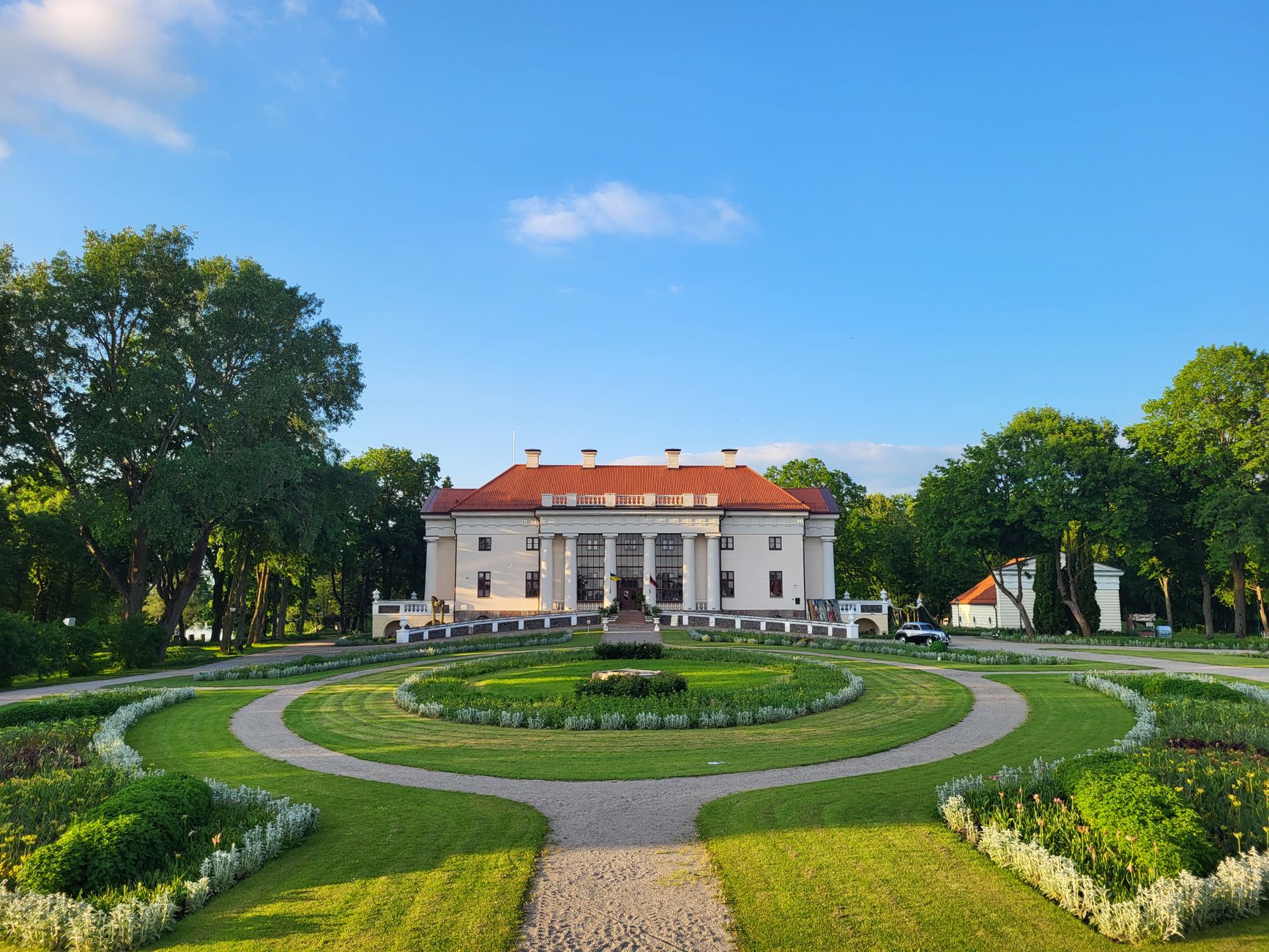
There is a 654-acre estate in Woodside, about fifteen minutes from San Carlos, where someone decided in 1917 that the flowers should be perfect. Not nice. Not pretty. Perfect. And the ripple effects of that decision are still visible in the arrangements you order from your local florist today.
That estate is Filoli, and if you haven’t been — or haven’t been in a while — April is the month to go. Here’s why it matters, what’s blooming, and how a Gold Rush fortune, a spring-fed estate, and a century of obsessive gardening quietly shaped Peninsula floral culture.
📜 The Origin Story
Filoli was built by William Bowers Bourn II, owner of the Empire Mine (California’s richest hard-rock gold mine) and president of the Spring Valley Water Company, which supplied San Francisco’s water. The name “Filoli” is an acronym derived from Bourn’s personal credo: Fight for a just cause, Love your fellow man, Live a good life. It sounds like a tech company mission statement, but in 1917 it was carved into a 56,000-square-foot Georgian Revival mansion on a site chosen specifically because Crystal Springs Reservoir was next door and the water supply was essentially unlimited.
That unlimited water mattered enormously for what came next: the gardens.
Bourn hired Bruce Porter, a San Francisco artist, and landscape architect Isabella Worn to design the formal gardens. Their vision was uncompromising — a 16-acre formal garden structured around a series of “garden rooms,” each with a distinct color palette, seasonal focus, and planting scheme. The Sunken Garden. The Walled Garden. The Woodland Garden. The Knot Garden. Each one designed so that something was always in peak bloom, no matter what month you visited.
In 1937, the estate was purchased by William and Lurline Roth (of Matson Navigation Company), who expanded the gardens further and maintained them with the same intensity for four decades. Lurline Roth was the one who turned Filoli’s cutting gardens into something legendary — growing flowers specifically to be cut and arranged for the house, for entertaining, and for the Peninsula social events where a Filoli arrangement on the table meant something.
✂️ The Cutting Garden and Its Influence
This is the part most visitors walk past without realizing its significance. Filoli’s cutting garden wasn’t just a source of flowers for the house — it was a laboratory for floral design on the Peninsula.
The Roth family’s approach to cutting flowers was specific and intentional:
- Seasonal rotation: The garden was planted so that every week of the growing season produced fresh material for arrangements. Spring bulbs gave way to roses, which gave way to dahlias, which gave way to chrysanthemums. There was never a gap.
- Color coordination: Flowers were grown in color blocks so that arrangers could create cohesive palettes without mixing random colors. This is the origin of the “tonal arrangement” style that’s now standard in Peninsula florist shops. exactly the kind of supporting plants we wrote about in our ferns and willow piece.
- Scale and proportion: Arrangements for the Filoli house had to work in rooms with 17-foot ceilings. This forced arrangers to think about scale in ways that home-kitchen florists didn’t. The result was a “generous but structured” style that became the Peninsula standard for event florals.
When the National Trust for Historic Preservation took over Filoli in 1975, the volunteer docent and garden programs trained hundreds of Peninsula residents in the Filoli style. Many of those volunteers went on to work at or patronize local flower shops. The aesthetic — seasonal, color-coordinated, generous with greenery, structured but not stiff — became the default expectation for “a nice arrangement” in the San Carlos, Woodside, Atherton, and Menlo Park corridor.
If you’ve ever ordered flowers on the Peninsula and thought “that looks right” without being able to say why, there’s a decent chance you’re responding to a design language that originated in a Woodside cutting garden a century ago.
🌸 What’s Blooming at Filoli in April
April is arguably Filoli’s best month. The spring bulb display is at its peak and the roses are just beginning. Here’s what you’ll see right now:
- Tulips: Thousands of them, in the formal garden beds. Filoli plants tens of thousands of tulip bulbs each fall, and April is when they peak. The color blocks — solid beds of red, then pink, then white, then purple — are the direct descendants of the Roth-era planting philosophy.
- Wisteria: The wisteria along the garden walls and pergolas blooms in mid-April. The cascading purple clusters against the brick walls are one of the most photographed scenes on the Peninsula.
- Magnolias: Several large magnolia trees are in late bloom in April, their waxy white and pink flowers covering the ground with petals.
- Camellias: The camellia collection is finishing its season but still has late varieties in bloom, especially in the woodland areas.
- Dogwoods: Pacific and Eastern dogwoods bloom white and pink along the garden paths.
- Native wildflowers: The estate’s outer acreage includes California native plantings that bloom with poppies, lupines, and shooting stars in April — a beautiful counterpoint to the formal gardens.
- Early roses: The first flush of roses begins in late April in the Rose Garden. By May, this section is at full volume.
For a broader Peninsula bloom guide, our spring bloom walking piece covers what’s flowering in San Carlos, Belmont, San Mateo, and Redwood City right now.
🚶 Visiting Filoli: Practical Info
- Getting there: From San Carlos, take Edgewood Road to Cañada Road. The entrance is on Cañada Road between Woodside and Redwood City. About 15 minutes by car.
- Hours: Open Wednesday through Monday, 10 AM–5 PM (last entry at 3:30 PM). Closed Tuesdays. Check filoli.org for current schedules and special events.
- Admission: Tickets are timed-entry and should be reserved online in advance, especially in April when the tulip display draws large crowds. Member pricing is available and pays for itself quickly if you visit more than twice a year.
- What to wear: Comfortable walking shoes. The garden paths are well-maintained but you’ll walk at least a mile. Layers — mornings can be cool in the canyon.
- How long: Plan 2–3 hours minimum. The gardens alone take 90 minutes to walk thoroughly. The house tour adds another 45 minutes. The café is worth a stop.
- Photography: Bring a camera. Filoli in April is one of the most photogenic places in the Bay Area. Tripods are allowed in the gardens.
🏠 The House Itself
The 56,000-square-foot Georgian Revival house is worth touring even if you came for the gardens. A few highlights:
- The ballroom — with flower arrangements that are changed weekly by Filoli’s volunteer arrangers, using flowers cut from the estate gardens. This is where the Filoli floral style is most visible.
- The library and drawing rooms — with smaller, more intimate arrangements that show how the same design principles scale down for home use.
- The estate’s connection to the television show Dynasty — Filoli served as the exterior of the Carrington mansion in the 1980s series. If you watched it, you’ll recognize the facade immediately.
🌿 Beyond Filoli: Other Peninsula Garden Destinations
If Filoli sparks a garden interest, the Peninsula has more:
- San Mateo Japanese Garden — A completely different aesthetic. We wrote a full guide to what blooms there and when. April is excellent for azaleas and cherry blossoms.
- Gamble Garden in Palo Alto — A historic home garden open to the public, with beautiful perennial borders and a Mediterranean garden. Smaller than Filoli but lovely.
- Stanford University gardens — The Arizona Garden (cactus and succulents) and the grounds around the Main Quad are worth a walk, especially when the roses are blooming.
- Peninsula nurseries — Wegman’s in Redwood City, Summerwinds in San Carlos, and several smaller specialty nurseries carry many of the same varieties grown at Filoli. Our piece on locally grown Peninsula flowers covers the farm-to-vase angle.
💐 What Filoli Teaches Us About Ordering Flowers
Here’s the takeaway for the next time you order an arrangement:
- Seasonal is better. Filoli’s gardens are spectacular because they work with the season, not against it. The best florist arrangements do the same thing. April flowers should look like April, not like a greenhouse in February.
- Color cohesion matters. The Filoli cutting garden grows in color blocks for a reason. A tonal arrangement — varying shades of one color family — almost always looks more sophisticated than a random rainbow.
- Greenery is not filler. Filoli arrangers use foliage as structure. So do we. When you see eucalyptus, ferns, or Italian ruscus in your arrangement, that’s not padding — it’s the frame that makes the flowers sing.
- Scale to the space. A Filoli ballroom arrangement wouldn’t work on your kitchen counter. A countertop posy wouldn’t register in a ballroom. Tell your florist where the flowers are going and we’ll build accordingly.
At sancarlosflorist.com, we deliver same-day across the Peninsula — to San Carlos, Woodside, Atherton, Menlo Park, Redwood City, Belmont, San Mateo, and everywhere in between. Whether you’re inspired by Filoli or just need something beautiful on the table tonight, we’ve got you. 🌸